HISTORY OF FILIGREE
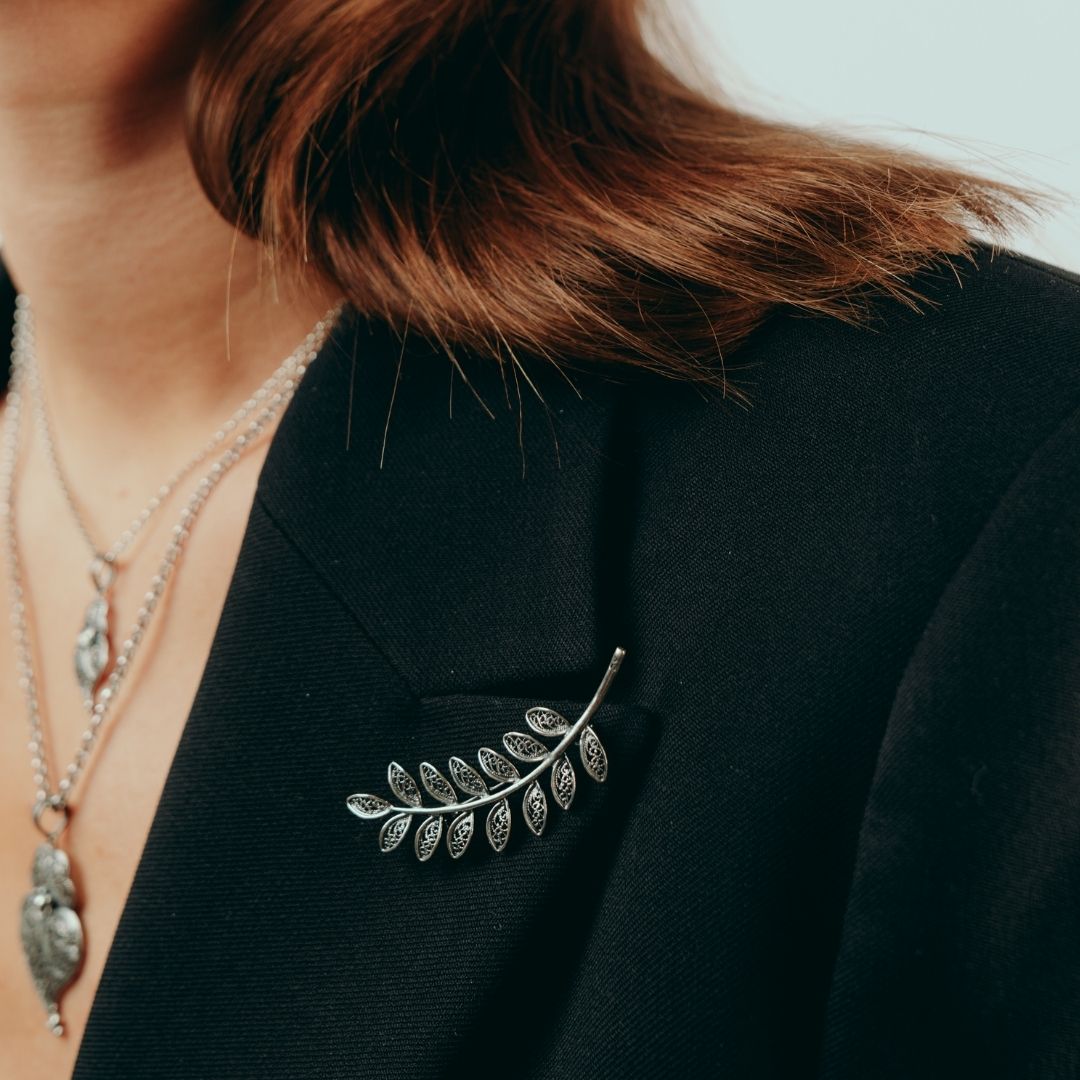
The word filigree is born from the union of the Latin terms filum (thread) and granum (grain), an expression that evokes the supreme delicacy of transforming extremely fine threads of gold or silver into works of art. This 'granulated thread,' shaped by hand by Portuguese master goldsmiths, gave rise to one of the most admired jewelry traditions in the world: filigree.
filigree is an art that demands the highest degree of skill, patience, and imagination. Each piece is created from extremely fine threads of sterling silver or gold, twisted, intertwined, and soldered with millimetric precision by the skilled hands of artisans. It is this mastery, passed down from generation to generation, that grants filigree its international recognition as one of the most refined and sophisticated jewelry techniques in the world.
At Portugal Jewels, each filigree jewel is handcrafted in Portugal, respecting centuries-old techniques and using the highest quality materials, 925 sterling silver and gold-plated silver. From our workshops in Northern Portugal emerge pieces that honor tradition, with guaranteed authenticity, secure worldwide shipping, and personalized service that accompanies every order.
ORIGINS OF FILIGREE
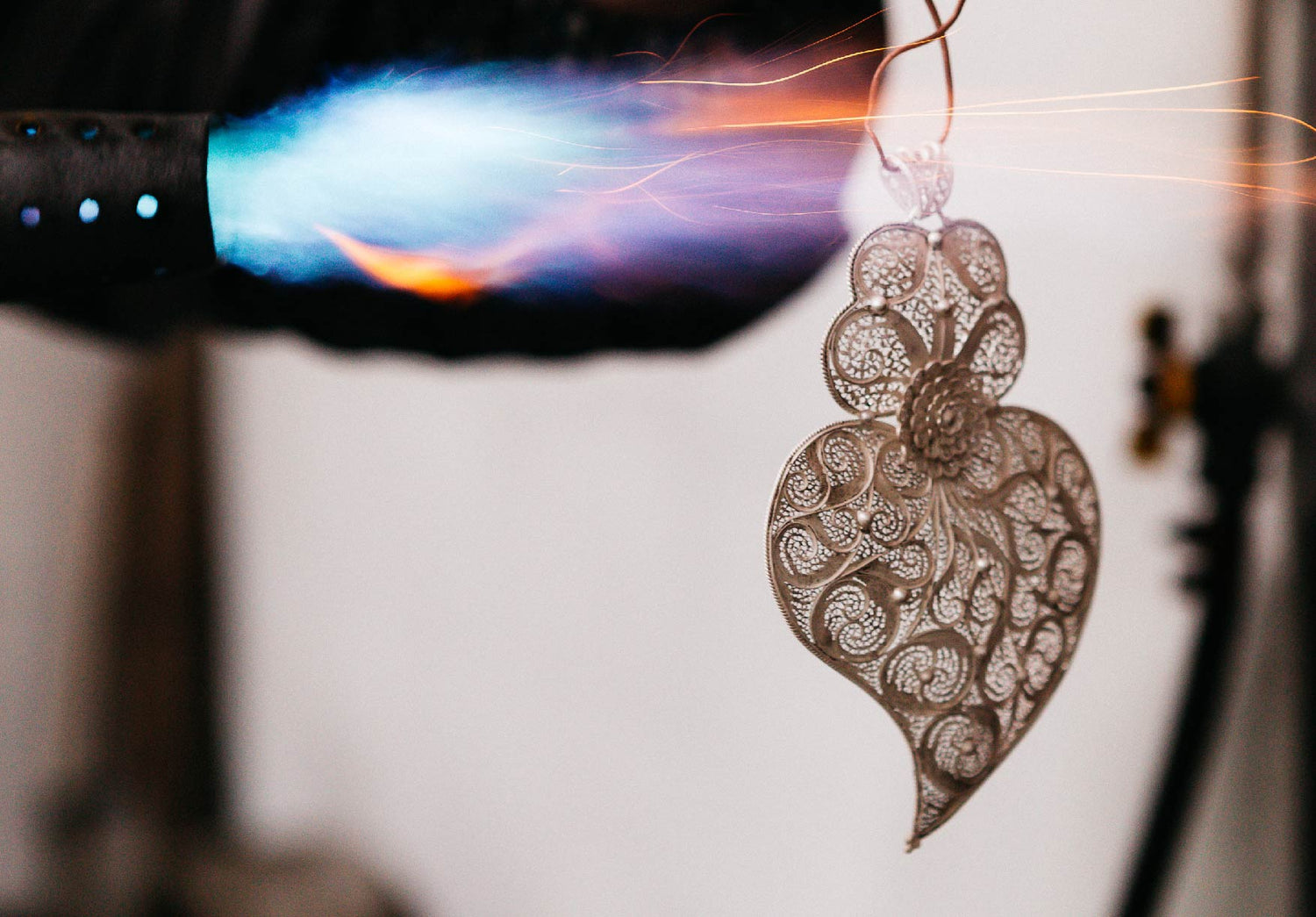
The origins of filigree date back to the third millennium BC, with archaeological evidence found in Mesopotamia. The technique reached the Iberian Peninsula through Phoenician trade routes and the influence of Arab civilizations, but it was in Portugal that it achieved its most singular expression.
From the 17th century onward, filigree began developing its own distinctive identity, unlike any other goldsmithing tradition in the world. In the 18th century, driven by commissions from the royal court and the clergy, and influenced by Baroque aesthetics, production grew exponentially, evolving from an exclusive ornament of the nobility to a popular adornment associated with the cultural traditions of northern Portugal.
Today, filigree is recognized as an important cultural and artistic expression in Portugal, a living symbol of an identity that spans millennia.

THE ARTISANAL TECHNIQUE
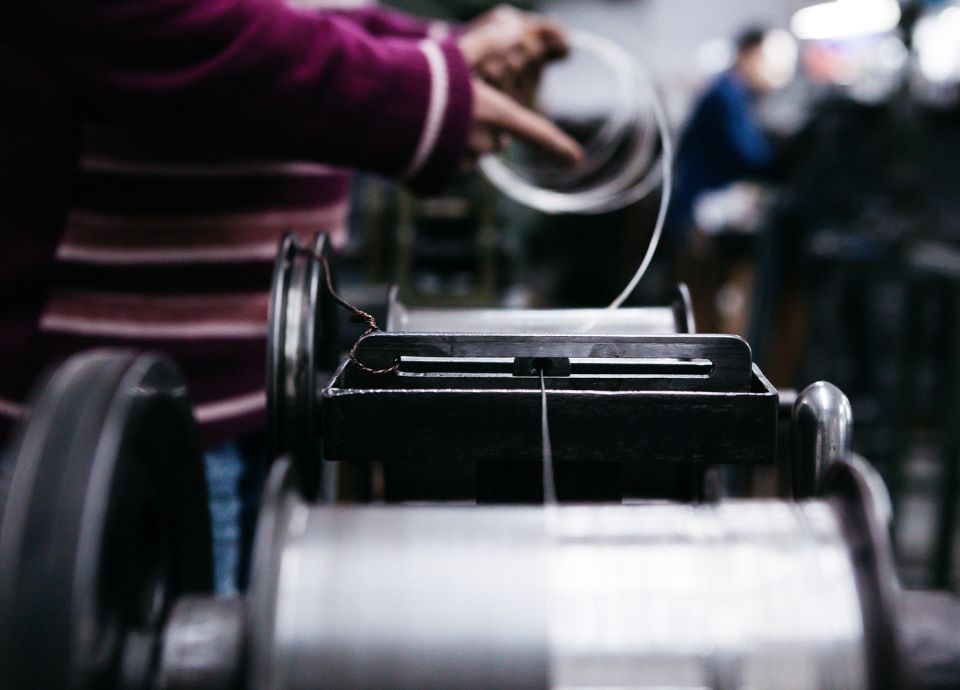
The process of creating a filigree piece requires extraordinary dexterity. The metal, gold or silver, is melted and transformed into a thin bar, which is progressively drawn out until threads of almost imperceptible thickness are obtained. These threads are then twisted, flattened, and heated to make them malleable.
The master goldsmith first creates the structure, the skeleton of the jewel, and upon it arranges the twisted threads into traditional patterns: S-shaped curves, spirals, scales, and scrolls. Every detail is positioned and soldered by hand in a precise process that can take hours or even days per piece.
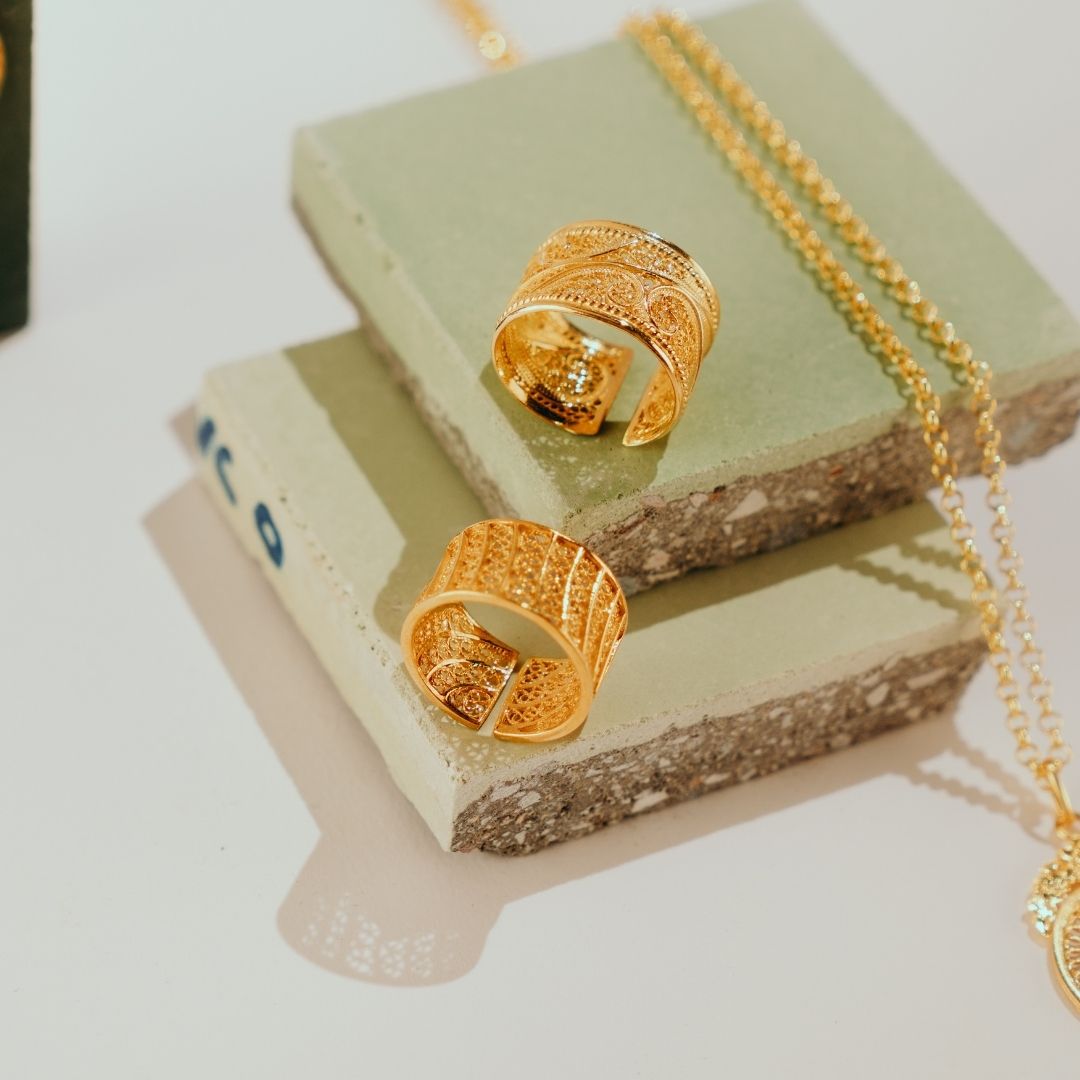
There are two types of filigree: applied filigree, used as a decorative element over a surface, and integrated filigree, where the entire piece is constructed exclusively from intertwined threads, without base or background, revealing the artisan’s absolute mastery.
THE ART OF DETAILS
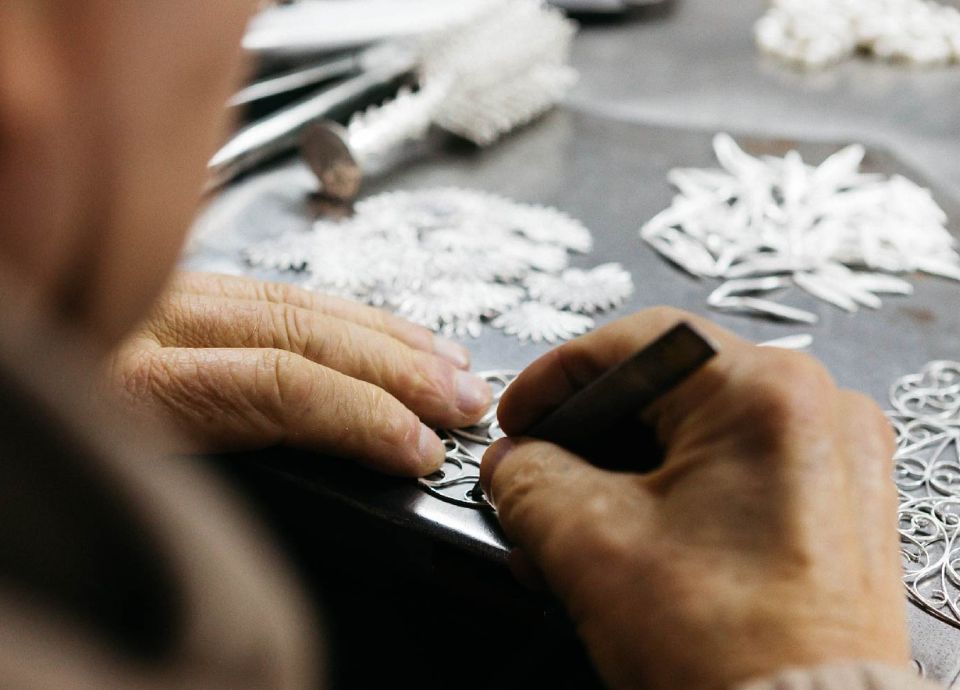
The filigree technique consists of transforming precious metals into extremely fine threads, traditionally gold alloys, although many pieces are also created in sterling silver. These threads, often no thicker than 0.22 millimetres, are twisted in pairs and carefully flattened to create the delicate structures that define filigree jewelry.
These threads, often as thin as a strand of hair, are repeatedly drawn until they reach the exact thickness required by the artisan. They are then twisted to increase their strength and flexibility, allowing them to be curved, shaped, and rolled into intricate decorative patterns without breaking.
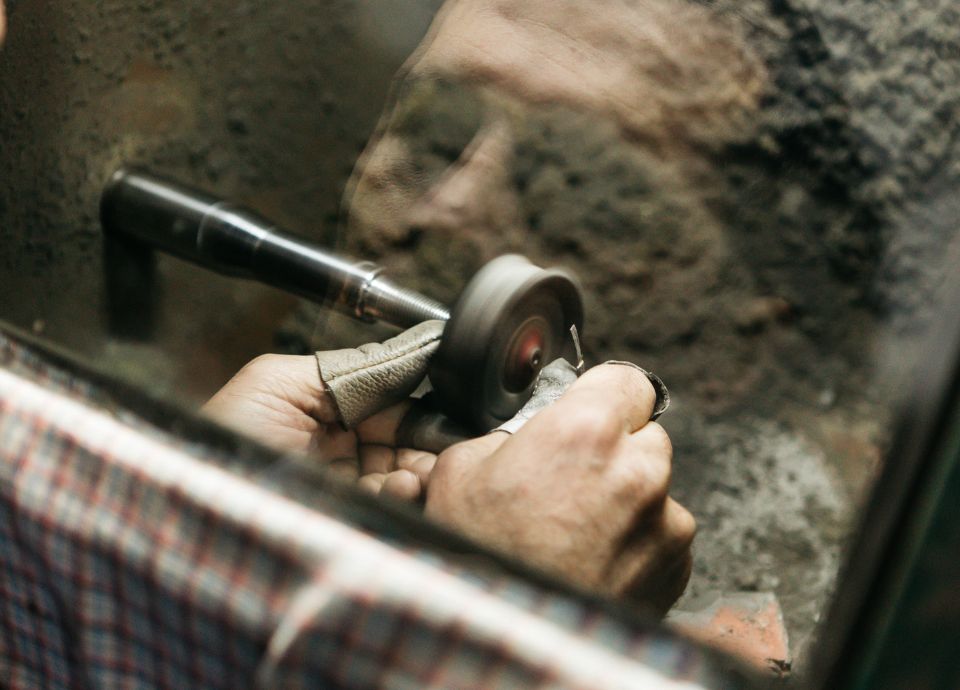
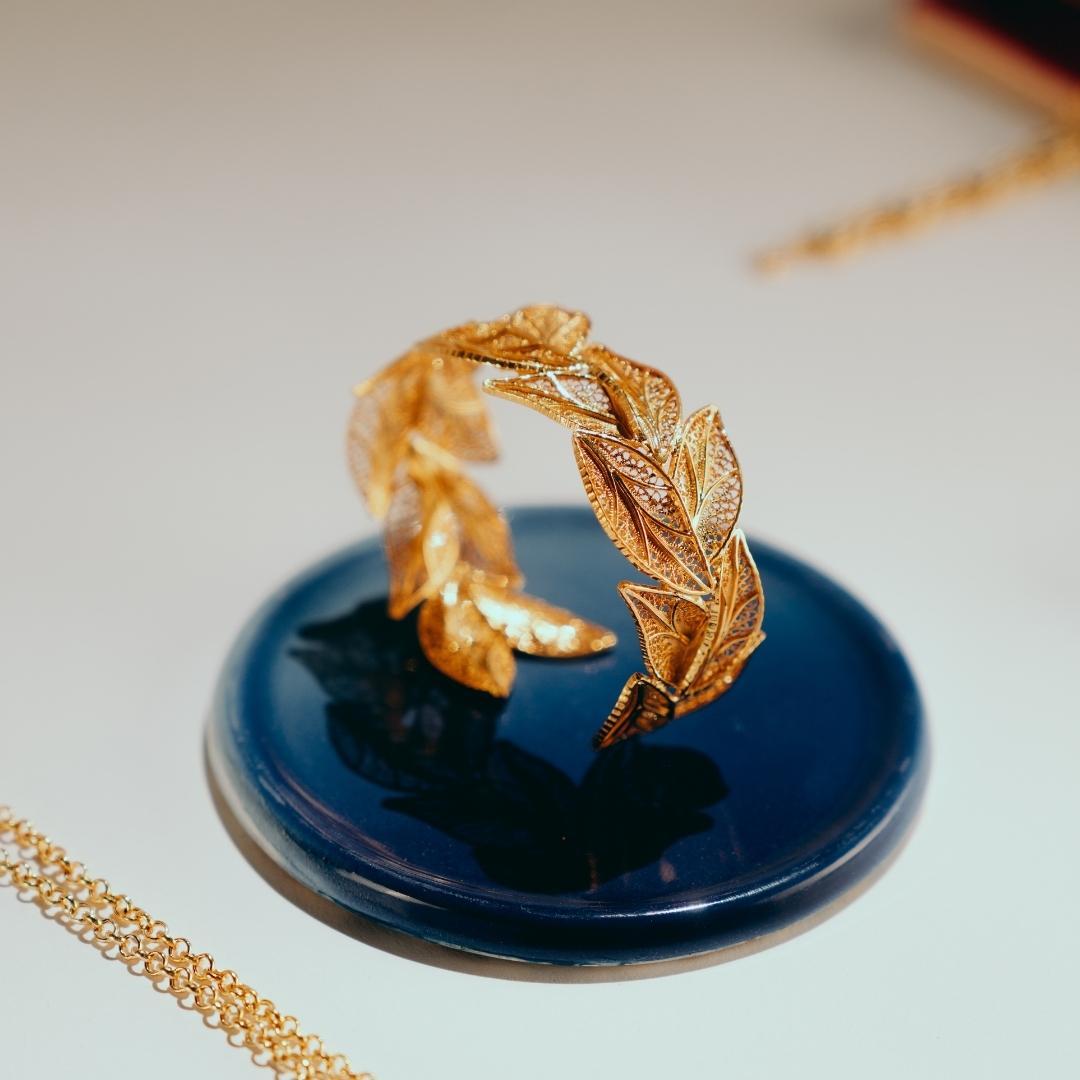
In Portugal, artisans have long used filigree not only as a form of artistic expression in traditional jewelry but also as a also marking its presence in various cultural expressions. Its intricate motifs often draw inspiration from nature and everyday life, appearing in shapes such as flowers, waves, spirals, and fish scales that give each jewel its distinctive character.
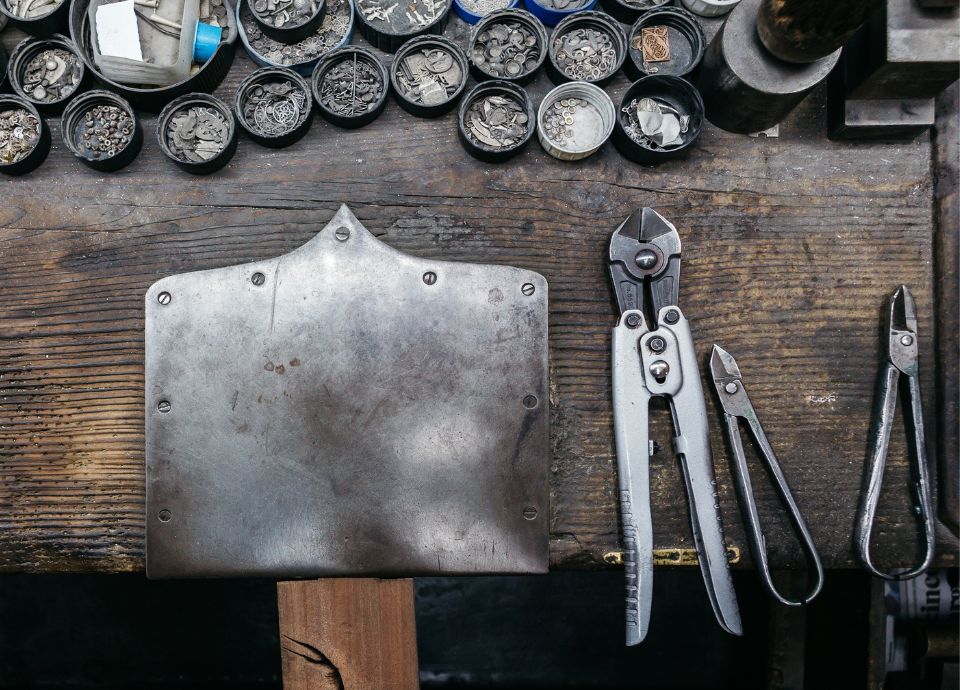
Master goldsmiths work extremely fine threads of gold or silver, carefully intertwining and soldering each element to form intricate compositions.
This demanding craftsmanship, refined over generations, is what has earned filigree its international reputation for excellence and quality.
Iconic Filigree Jewelry
-

The Heart of Viana
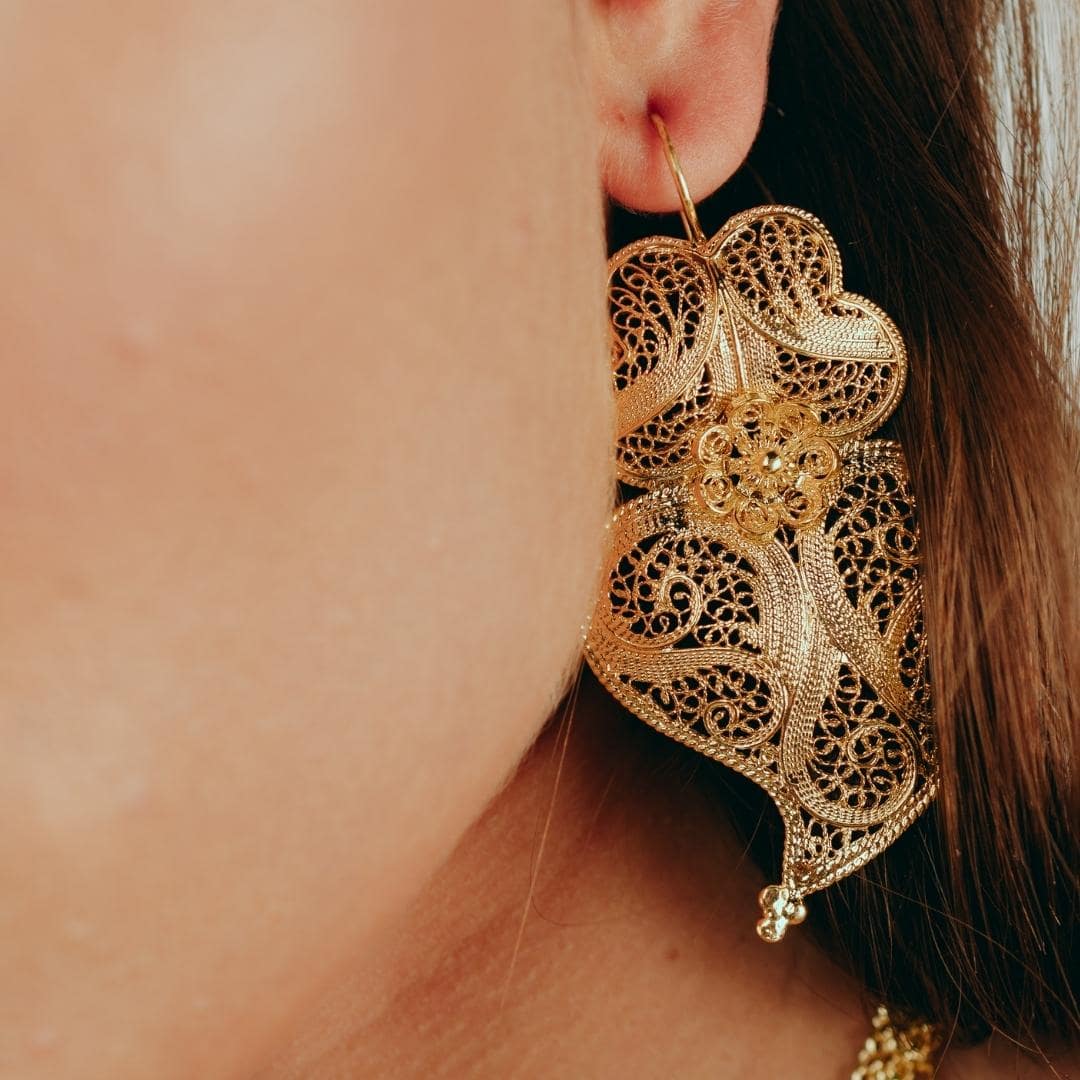
Heart of VianaThe Heart of Viana is the most emblematic piece of filigree.
Contrary to popular belief, its origin is not linked to romantic love but to religious devotion, as it symbolizes the Sacred Heart of Jesus.
Over time, it became an icon of love and tradition, inseparable from the culture of Minho and from the traditional female attire worn during the Senhora d'Agonia festivities in Viana do Castelo.
At Portugal Jewels, you will find the Heart of Viana reinterpreted in sterling silver and gold-plated silver, faithful to tradition and perfect for those who value authenticity.
-

Viana’s Contas and Traditional Necklaces
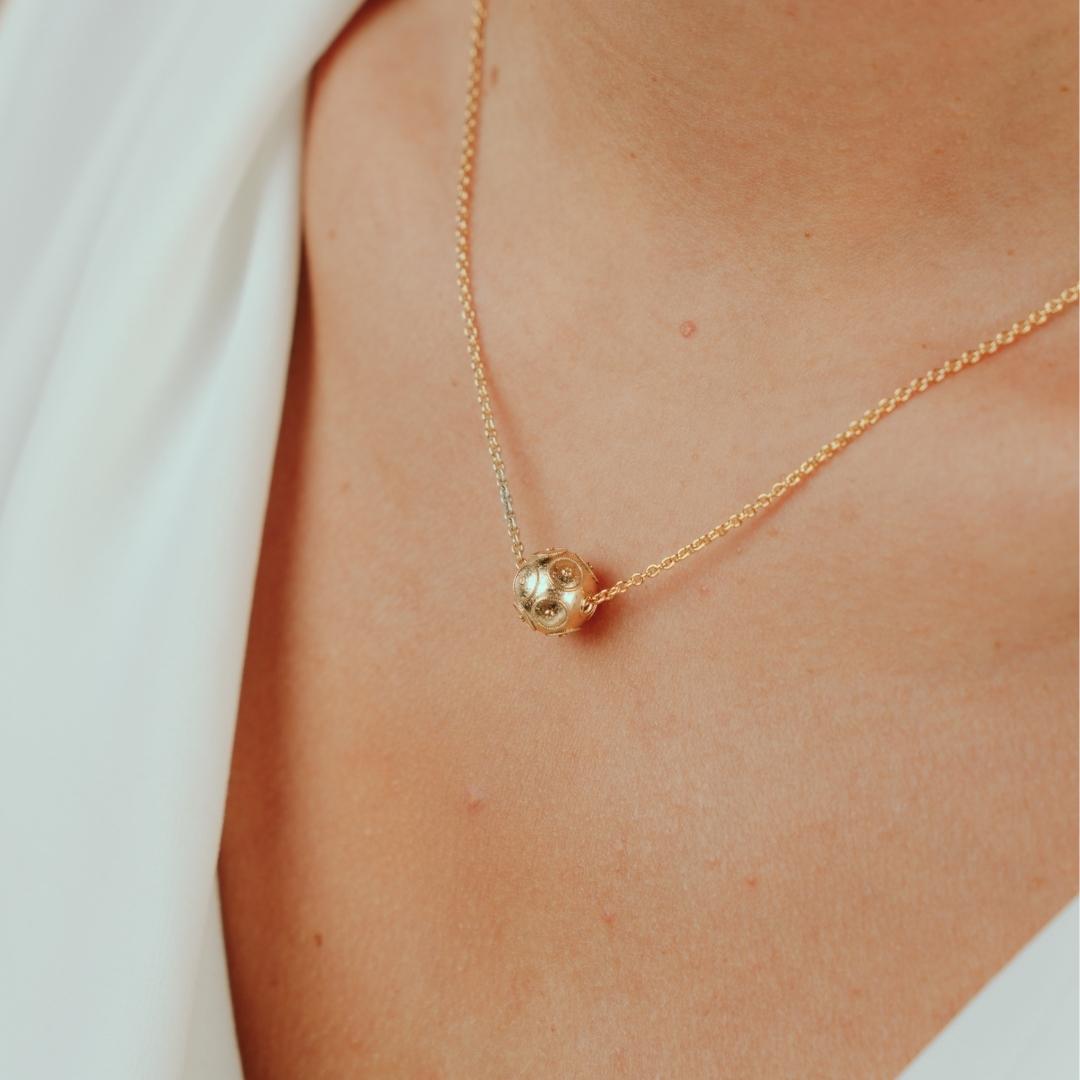
Viana's ContasViana’s Contas are small spheres crafted with filigree elements, originally worn during festivals and pilgrimages in Northern Portugal.
Strung into necklaces, they represent one of the most delicate expressions of this centuries-old art. In our collection, you will find Viana's Contas and traditional necklaces that preserve the essence of filigree with impeccable finishing.
-

Arrecadas
ArrecadasArrecadas, crescent-shaped earrings, are one of the oldest typologies of Portuguese goldsmithing, with roots in ancient Castreja culture.
These earrings are part of Portugal’s symbolic richness and incorporate multiple filigree elements that enhance their visual impact and historical value.


WHERE FILIGREE IS BORN
Filigree has a strong historical presence in northern Portugal, a region historically rich in precious metals. Gondomar, near Porto, is known for the production of detailed goldsmith pieces. Póvoa de Lanhoso, in the heart of Minho, is frequently associated with the goldsmithing tradition linked to gold work, known as the 'land of gold', where generations of artisans dedicate their lives to this centuries-old art.
In Travassos, the Gold Museum, housed in a former goldsmith workshop dating back to 1742, preserves and promotes the memory of a community linked to gold craftsmanship since ancient times.

FILIGREE IN PORTUGUESE CULTURE
Filigree is much more than jewelry; it is a establishing itself as a tradition with expression in Portugal. Its motifs represent nature, religion, and love: the sea appears in fish, shells, and boats; the land inspires flowers, clovers, and garlands; faith manifests in Maltese crosses and reliquaries.
Traditionally, filigree pieces accompany the most important moments of life: they are an essential part of the bridal attire in Minho, shine in folk groups, and mark celebrations such as the Senhora d'Agonia festivities. Offering a filigree jewel is sharing a timeless tradition that endures through generations.
Frequently Asked Questions
What material is filigree made of?
Traditionally, filigree is crafted in gold, particularly 19.2kt gold, characteristic of Portugal, and in 925 sterling silver. At Portugal Jewels, pieces are available in sterling silver and gold-plated silver, maintaining the quality and authenticity of the artisanal technique
What is the most well-known filigree piece?
The Heart of Viana is the most recognized filigree piece worldwide. Originally a symbol of religious devotion to the Sacred Heart of Jesus, it became an icon of love and Portuguese tradition, especially associated with the region of Viana do Castelo.
Where is filigree produced in Portugal?
The main centers of filigree production are located in Northern Portugal, particularly Gondomar (district of Porto) and Póvoa de Lanhoso (district of Braga), the latter frequently associated with the goldsmithing tradition linked to gold work, known as the 'land of gold'.
When a piece is made entirely by the traditional process and is 100% handmade, this is indicated on the respective product page.